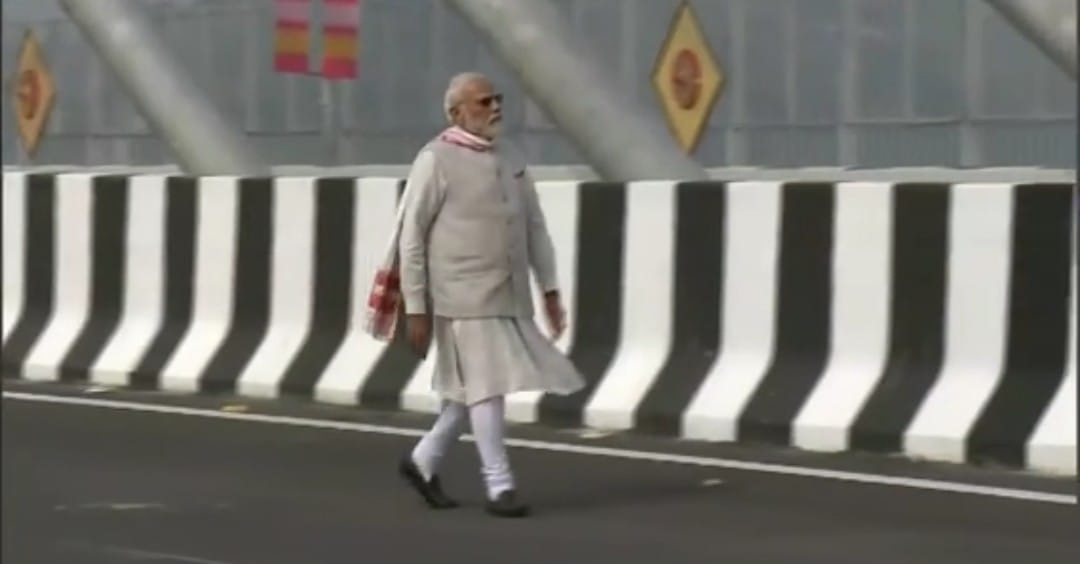
Guwahati, February 14 – Prime Minister Narendra Modi inaugurated the Kumar Bhaskar Varma Setu – a bridge over the Brahmaputra River that connects Guwahati and North Guwahati – on Saturday.
The 2.86-kilometer-long bridge, built at a cost of approximately Rs 3,030 crore, is a 6-lane extradosed prestressed concrete (PSC) bridge that connects Guwahati with North Guwahati and is the first extradosed bridge in Northeast India.
It will reduce the travel time between Guwahati and North Guwahati to 7 minutes. Given the high seismic activity of the region, the bridge incorporates base isolation technology using friction pendulum bearings.
High-performance stay cables have been used to ensure durability and long-term structural performance.
Furthermore, a Bridge Health Monitoring System (BHMS) has also been incorporated for real-time condition monitoring, early damage detection, and improved safety and service life of the extradosed bridge.
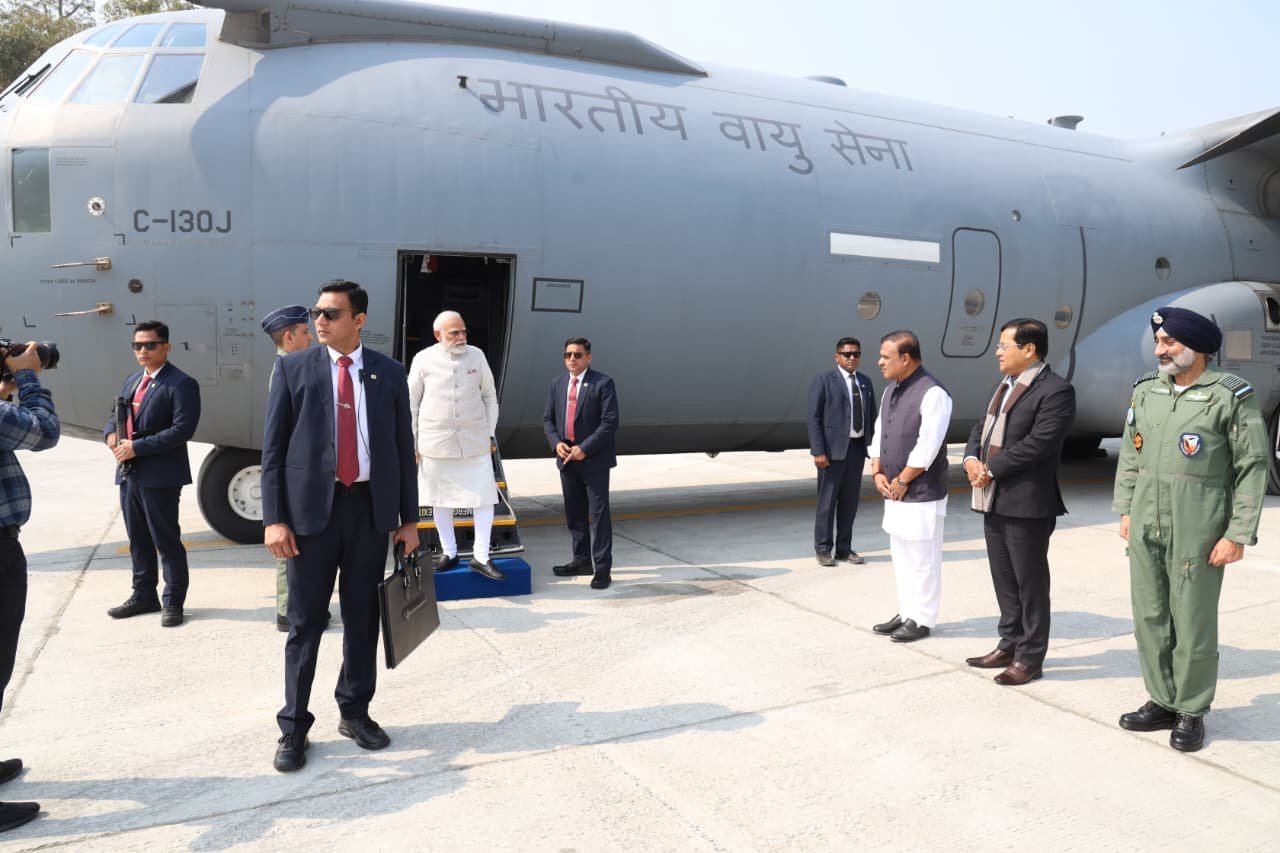
Earlier, today, Prime Minister Modi inaugurated an Emergency Landing Facility (ELF) on the National Highway in Moran in Dibrugarh district – the first such facility in the entire northeastern region.
Prime Minister Modi also witnessed an air show by the Indian Air Force shortly after the ELF was inaugurated. The air show included Rafale, Sukhoi, and MIG fighter aircraft.
The fighter planes successfully took off and landed on the highway strip.
According to officials, at least 1 lakh people gathered to witness this historic occasion.
Located in Upper Assam, the ELF is being viewed as a major strategic addition to India’s military infrastructure in the Northeast, offering the Indian Air Force enhanced operational flexibility in a region that has witnessed heightened tensions in recent years.
The Moran ELF has been designed to function as an alternative landing option in situations where the Dibrugarh Airport or the Chabua Air Force Station becomes unavailable due to operational constraints or emergency scenarios.
For the Indian Air Force, this facility significantly strengthens its ability to respond swiftly to contingencies near sensitive border areas.
The 4.2-kilometer-long reinforced concrete stretch has been engineered to serve as an emergency runway capable of handling both military and civilian aircraft.
Unlike conventional fixed airbases that may be vulnerable to targeting or disruption during conflict, highway-based landing facilities provide critical mobility and an element of operational surprise.