New Delhi, February 15 – For decades, left-wing extremism in India found refuge in the country's dense forests, alienated tribal populations, and fueled by ideological fervor, presenting an insurgency that seemed impossible to contain. This "Red Corridor," stretching across central India, was portrayed as a revolutionary movement representing the marginalized. However, by 2025, this narrative had taken a decisive turn.
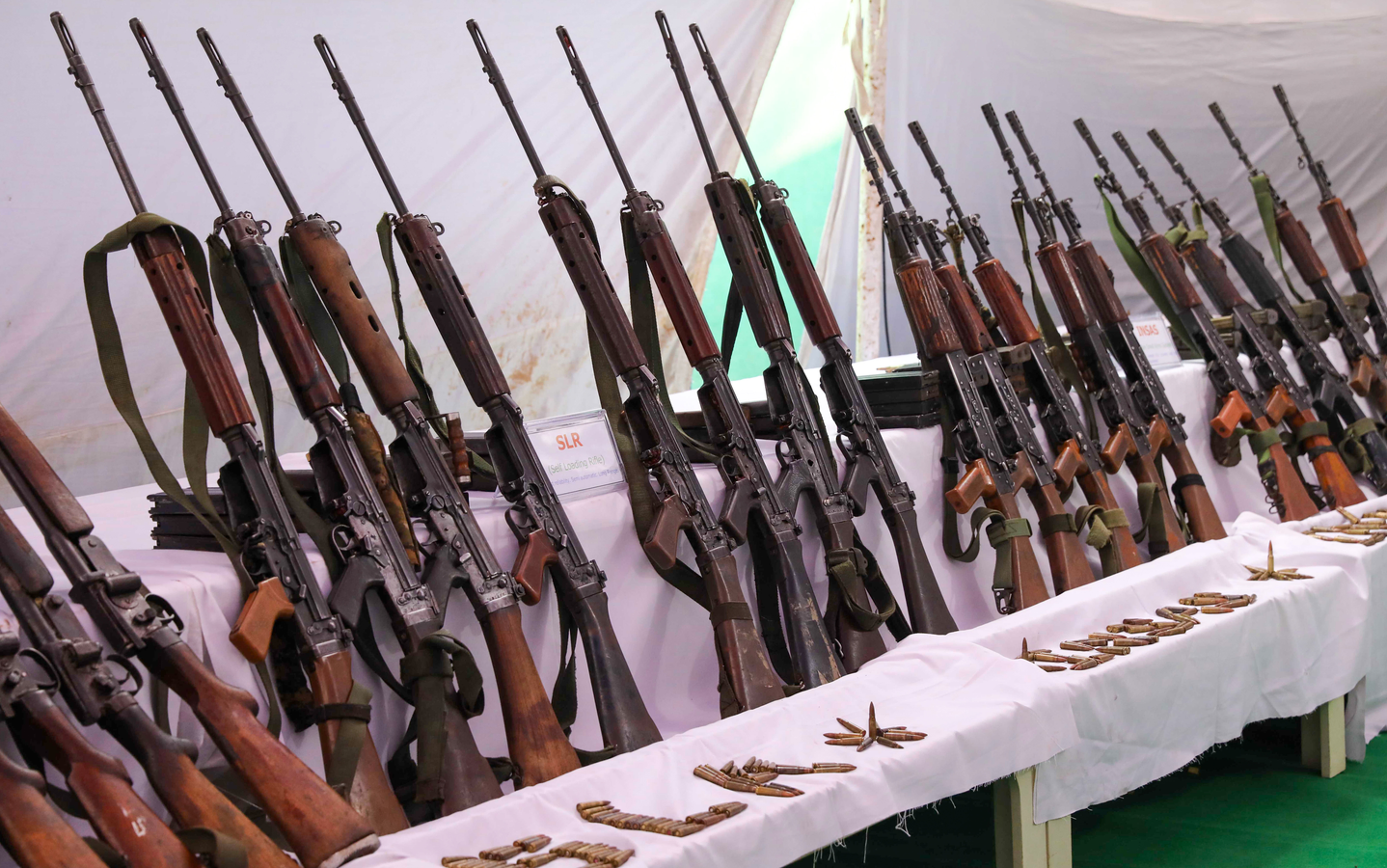
While security forces have successfully conducted numerous operations, the most significant development has been the growing wave of surrenders. Across Chhattisgarh, Maharashtra, Odisha, and Jharkhand, Maoist cadres, including senior commanders, have deserted the forests. They have laid down their weapons, revealed routes, identified leaders, and accepted rehabilitation. This steady trend, evolving into a significant movement, represents a fundamental shift in the conflict.
Insurgencies rarely end solely through armed confrontations. They collapse when the ideology that sustains them begins to weaken. For years, Maoism in India presented itself as a movement for justice for the marginalized. However, the reality within the organization presented a different picture.
Senior leaders often operated from relatively secure locations, while younger tribal recruits were placed on the frontlines. Villages suffered as violence escalated, but the movement failed to achieve any meaningful political gains or territorial control.
By 2025, even hardened cadres began to realize that the promised revolution was not going to materialize. Survival, rather than ideology, became their primary concern. What had once been presented as a historic struggle now appeared as an endless cycle of violence without purpose. As government outreach increased and development slowly reached remote areas, the contrast between Maoist promises and the actual realities became starker.
One of the earliest indicators of this shift occurred on January 29, 2025, when Kalmu Mangdu, Deputy Commander of Section 1 Company of the People's Liberation Guerrilla Army (PLGA), surrendered in Sukma along with team commander Sameer, also known as Sukka, and cadre Madavi Budhri. They were not peripheral recruits but active fighters. Their decision reflected a breakdown of internal trust, a fear of being treated as expendable, and a growing sense that survival was no longer guaranteed.
On March 3, 2025, the surrender of Dinesh Modium, a Divisional Committee member, in Bijapur further exposed the cracks. His departure weakened the "martyrdom narrative" that had long sustained morale among the cadres. It signaled that even mid-level leadership no longer believed in the movement's future and that ideological commitment was giving way to practical considerations.
Perhaps the most symbolic blow came on October 14, 2025, when Mallojula Venugopal Rao – known by several aliases, including Bhupathi, Sonu, and Abhay – surrendered in Gadchiroli along with approximately 60 other cadres. As a senior Politburo member, spokesperson, and ideologue of the CPI (Maoist), he was not merely a commander but a central figure within the organization. His wife, Tarakka, who was also a Maoist leader, had surrendered earlier. His departure marked the end of an era and dealt a severe psychological blow to the organization's remaining leadership.
Two months later, on December 10, 2025, Kiran Hidma Kowasi, also known as Bhima, a Divisional Committee Member who had joined the movement in the 1990s, surrendered in Gadchiroli. He represented the older generation – the veterans who had witnessed the insurgency at its peak. His decision indicated that even the most committed leaders no longer believed in any revival. When the veterans began to leave, the message spread faster than any propaganda.
Just a few days later, on December 12, another armed cadre, known as Medium Bhima, surrendered in Sukma. Although not a top commander, his surrender was significant because he was an active, weapon-bearing fighter. It demonstrated that the thinning was not just among ideological leaders but also among hardened foot soldiers who had once formed the backbone of the insurgency.
On December 13, two Area Committee Members – Roshan alias Mara Vedja and Subhash alias Pojja Rava – surrendered in Gondia, Maharashtra. This effectively sealed the Maharashtra-Chhattisgarh corridor, which had once been a vital lifeline for the Maoist movement and its logistical support. What had previously been a strategic route had become a trap, with increased surveillance, better coordination among security forces, and dwindling support bases.
The steady stream of surrenders across Bastar, Sukma, Gadchiroli, and parts of Jharkhand is not coincidental. It reflects the systematic weakening of the CPI (Maoist) as a fighting force, as an organization, and most importantly, as an idea. The once-feared Red Corridor has fragmented into disconnected pockets, isolated from supplies, communication, recruitment, and safe movement.
When armed movements reach a stage where surrender appears safer than survival, their collapse becomes inevitable. The developments of 2025 suggest that India's long battle against Maoist insurgency may finally be entering its closing chapter – not merely through the barrel of a gun, but through the quiet erosion of a once-potent revolutionary myth.
The real challenge now lies in ensuring that the vacuum left behind is filled not by another ideology of violence, but by governance, development, and lasting trust among the communities.
(The writer is a best-selling author known for her research and writings on India’s defence forces)