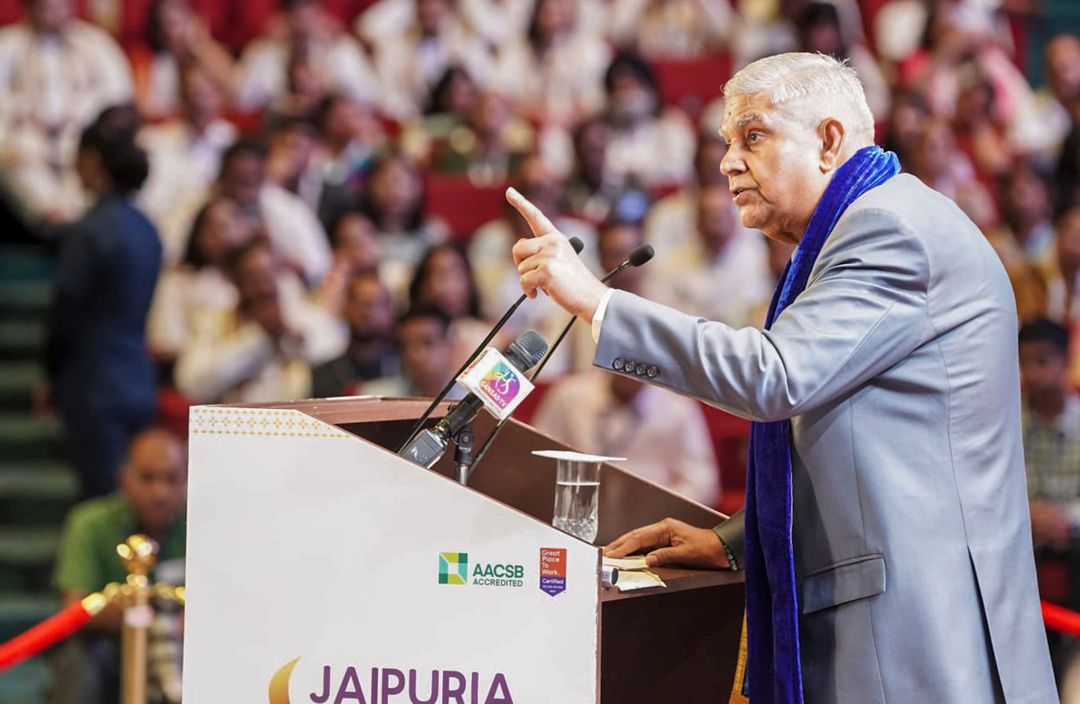
New Delhi, May 17—Vice President Jagdeep Dhankhar on Saturday stressed the need for citizens to adopt "economic nationalism," stating that individuals must refrain from supporting the economies of nations hostile to India’s national interests.
His remarks came against the backdrop of increasing calls to boycott trade and tourism with Turkiye and Azerbaijan, countries that have openly supported Pakistan amid tensions with India following Operation Sindoor.
Citizens Empowered to Contribute to National Security
Speaking at a public event in the capital, Dhankhar emphasized the power of individual action in safeguarding the nation. He highlighted the vital role of trade, business, commerce, and industry in contributing to national security.“Can we afford to empower countries that are inimical to our interests?” Dhankhar asked, urging a collective introspection. “The time has come when we must deeply think about economic nationalism.”
Call to Rethink Trade and Travel Choices
The Vice President warned against inadvertently boosting the countries' economies that stand against India during critical times.“We can no longer afford, by travel or import, to improve the economies of those countries because of our participation,” he said. “And those countries, in times of crisis, are positioned against us.”
Nationalism at the Core of Economic Decisions
Dhankhar concluded that all economic choices must align with a steadfast commitment to the nation’s interests. “Everything has to be reckoned on the fulcrum of unflinching commitment to nationalism,” he asserted.Background: Operation Sindoor and Regional Tensions
Turkiye has drawn sharp criticism for backing Pakistan and condemning India's military strikes on terror camps in Pakistan-occupied Kashmir under Operation Sindoor. Additionally, Pakistan deployed Turkish drones extensively during the conflict. Azerbaijan, too, had publicly extended its support to Pakistan.The Vice President's remarks add weight to the growing sentiment in India advocating a boycott of nations perceived as unsupportive or hostile during times of conflict.