Dhaka, February 14. Voters in Bangladesh this week chose balance over extremism, democracy over doctrinaire politics, and sovereignty over subtle subservience, according to a report. The results reflected their silent revolt against extremism and pro-Pakistan politics.
"History has a way of returning, though rarely in the same form. The 2026 election in Bangladesh was not just a transfer of power; it was a verdict on identity. When voters handed the Bangladesh Nationalist Party (BNP) a landslide — nearly two-thirds of Parliament — they were not just ending 15 years of Awami League dominance. They were closing the door on something else: the quiet re-entry of pro-Pakistan political nostalgia into our public life," wrote political and defence analyst M A Hossain in the weekly Blitz.
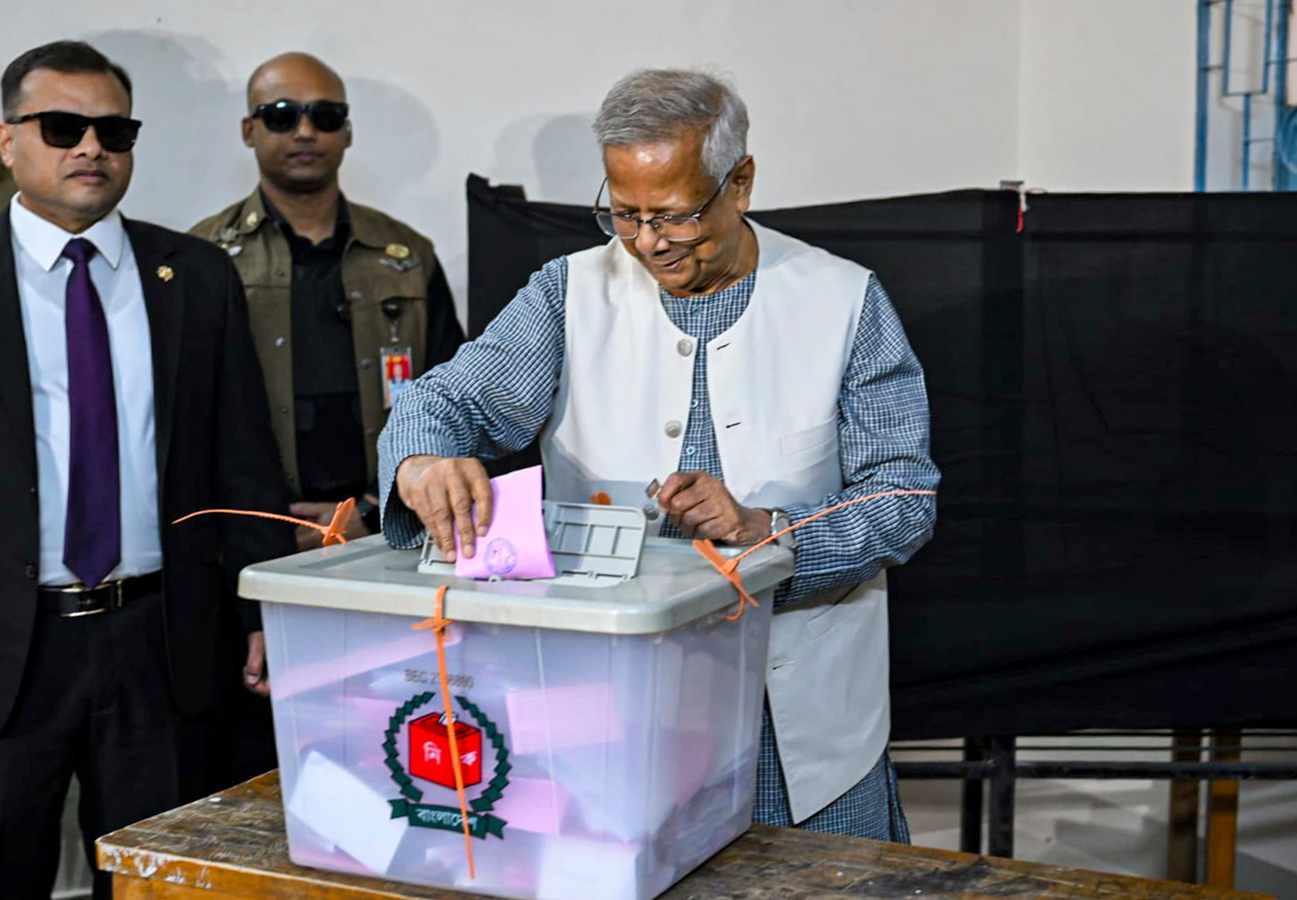
The BNP-led alliance claimed a decisive victory in the Bangladesh elections on Friday, securing 210 seats and comfortably surpassing the majority threshold, thus paving the way for the formation of a new government.
Now, Hossain believes, the test for BNP is to engage all parties without submitting to any.
"The electorate has drawn a boundary: no more experiments with ideological radicalism; no more opaque deals conducted in the name of expediency. Voters demanded transparency in governance and clarity in foreign policy. They demanded that Bangladesh be neither a pawn nor a proxy," he wrote.
The analyst wrote that the electorate saw through the narrow worldview of the Islamist Jamaat-e-Islami party — one that "confused religious affinity with strategic wisdom."
"Young Bangladeshis are digitally fluent, globally aware, and impatient with ideological theatrics. They have watched the Middle East’s experiments with political Islam, Europe’s battles with extremism, and South Asia’s oscillations between strongman rule and democratic revival. Their message was not radical; it was refreshingly moderate. They chose liberal democracy over radical romanticism," Hossain opined in the weekly Blitz magazine.
The opinion piece highlighted that the 51-point manifesto of Tarique Rahman-led BNP reads less like a revolutionary tract and more like a technocratic repair manual.
"Bangladesh has experienced what might be called a democratic reset. The ouster of Sheikh Hasina in 2024 created uncertainty; the 2026 election restored procedural legitimacy. BNP’s commanding majority ensures constitutional reform without dependence on Islamist blocs. Jamaat, with its 63 seats, remains a vocal opposition — but not a kingmaker," it stated.
"That arithmetic matters. It prevents the ideological overreach many feared. It assures regional partners that Dhaka’s compass will not swing unpredictably toward Islamabad or any other capital," Hossain added.