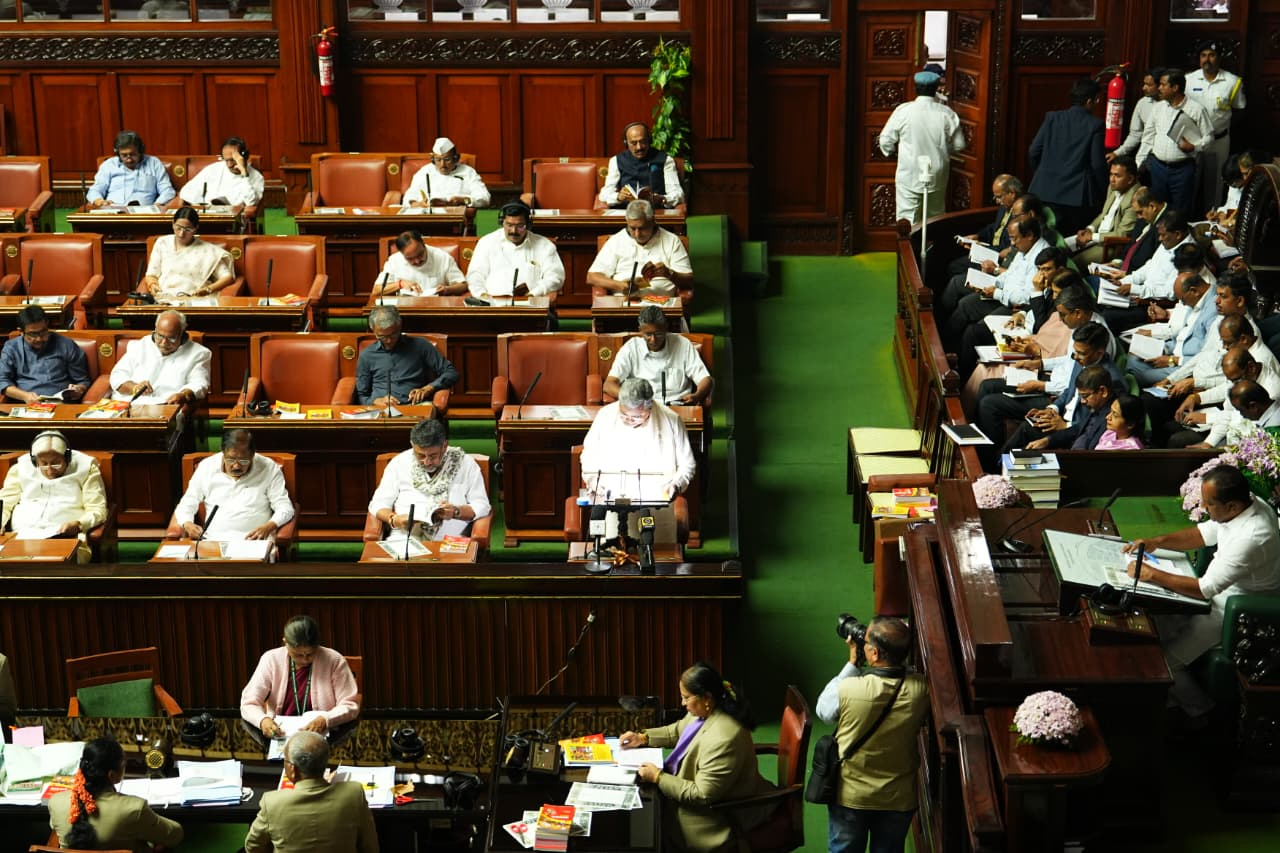
Bengaluru, March 6 – The Karnataka Budget 2026-27 places Artificial Intelligence (AI) at the core of the State’s strategy for technological advancement, inclusive growth, and improved governance, with a range of initiatives aimed at integrating AI across agriculture, education, public services, and skill development. Chief Minister Siddaramaiah announced this while presenting the budget.
Presenting the budget, CM Siddaramaiah highlighted Karnataka's growing prominence in the global technology ecosystem. Karnataka has moved from 21st to 14th position in the global startup ecosystem, with over 18,000 active startups, and Bengaluru has strengthened its global standing, ranking fifth among the world's top 50 cities in AI and Big Data.
Acknowledging the transformative impact of rapid AI advancements on global economic systems, the government has outlined a comprehensive strategy to integrate AI-driven technologies across key sectors.
In the agriculture sector, the government will upgrade the Raitha Kare Kendra (Farmer Call Centre) with AI technology, enabling farmers to access real-time information on weather conditions, market prices, crop advisories, and government schemes, thereby improving decision-making at the grassroots level.
In the education sector, the Karnataka government will introduce an AI-based personalized self-learning digital tutor in collaboration with IIT Dharwad, expected to benefit approximately 12.28 lakh students in Classes 8 to 12 by enabling personalized learning and improving educational outcomes across the State.
The government will also implement an AI-based facial recognition attendance system across Anganwadis, schools, colleges, and hostels, ensuring accurate attendance monitoring and making daily attendance data publicly available, thereby improving transparency and accountability.
To expand access to advanced technology education beyond major urban centers, the government will establish modern AI Data Labs in 50 government colleges located in Tier-2 and Tier-3 cities, with a grant of Rs. 10 crore in collaboration with the Centre's AI Mission. These labs will be equipped to equip rural youth with advanced AI skills and improve employability in emerging technology sectors.
New courses with high employment potential, including AI, Machine Learning, Cloud Computing, and Automation Engineering, will also be introduced in government polytechnics and engineering institutions to prepare students for future technology-driven industries.
In a move to promote technological inclusion, 250 engineering graduates from Backward Classes will receive advanced AI training at premier institutions such as IITs, NITs, and IIMs, strengthening their technical capabilities and improving employment opportunities in high-growth sectors.
AI will also be used to enhance citizen services. The Department of Food and Civil Supplies will convert its existing helpline into an AI-based "Smart Annavani," an intelligent grievance redressal platform equipped with automated responses, voice chatbots, and improved call management systems to enhance efficiency and responsiveness in public service delivery.
To strengthen the State’s research and innovation ecosystem, the AI and Robotics Technology Park (ART-PARK) under the Indian Institute of Science (IISc) will establish a new robotics and AI campus titled "Bangalore Robotics and AI Innovation Zone (BRAINz)" in collaboration with ISRO and KEONICS. This initiative is expected to boost research, innovation, and entrepreneurship in emerging technologies.
The government will also establish a Centre of Excellence for Artificial Intelligence at IIIT Raichur at a cost of Rs 5 crore to expand research capabilities and create opportunities for students and innovators in North Karnataka.
In addition, two more AI Centres of Excellence will be set up in Bengaluru in collaboration with the Institute of Bioinformatics and Applied Biotechnology, the Centre for Cellular and Molecular Platforms, and NASSCOM at a total cost of Rs 16 crore. These centres will focus on advanced research, industry collaboration, and the development of next-generation AI applications.
Artificial Intelligence will further be integrated into governance through the development of Kaveri 3.0 software at a cost of Rs 65 crore. This new system will enable a fully AI-enabled paperless property registration process integrated with asset management systems across government departments, aimed at simplifying procedures, reducing delays, and improving transparency.
These initiatives reflect the government’s broader vision under the Karnataka Budget 2026-27 to empower people, expand opportunities, and build a future-ready State where technological innovation strengthens governance and delivers tangible benefits to farmers, students, entrepreneurs, and citizens.