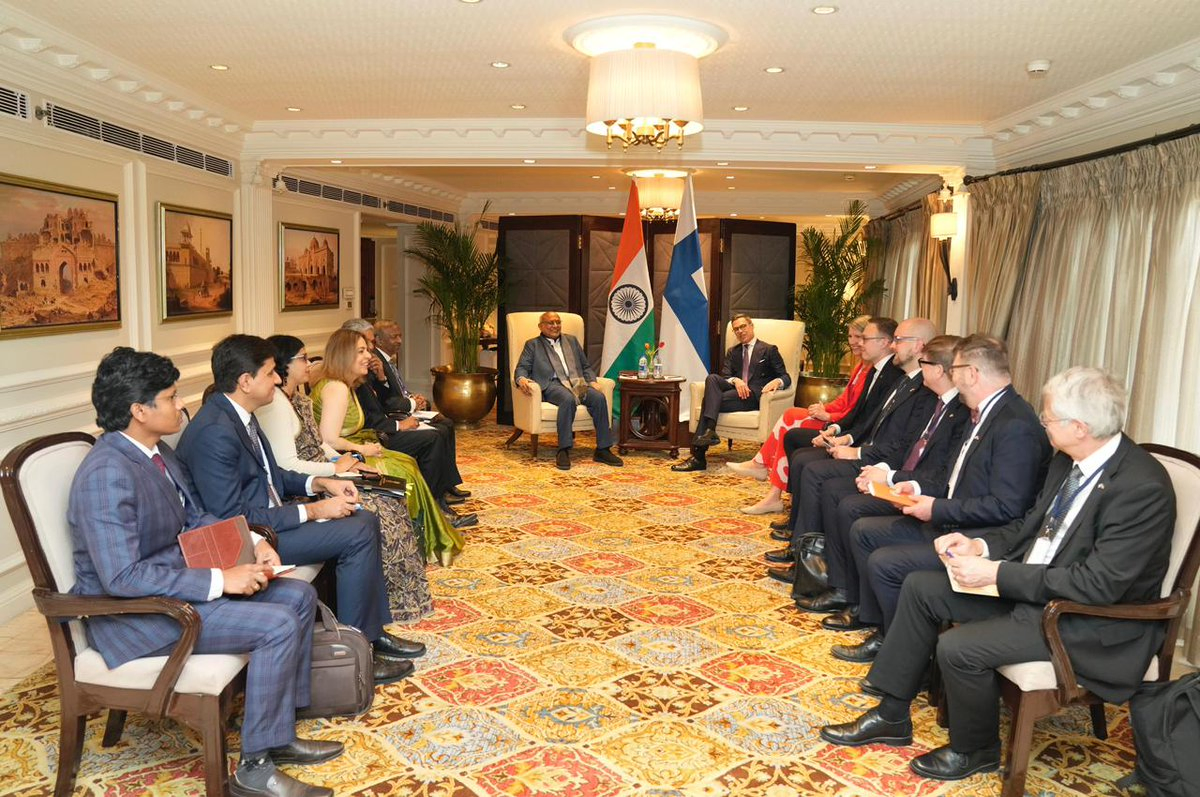
In New Delhi, on March 5, Finnish President Alexander Stubb stated that the era of a world dominated by Western countries is over. While this change is evident, it will take time for it to be fully understood in the West.
In his address at the Raisina Dialogue, Stubb also cautioned that "without a functioning world order, power vacuums will be filled by raw power, rogue behavior, and predatory hegemons."
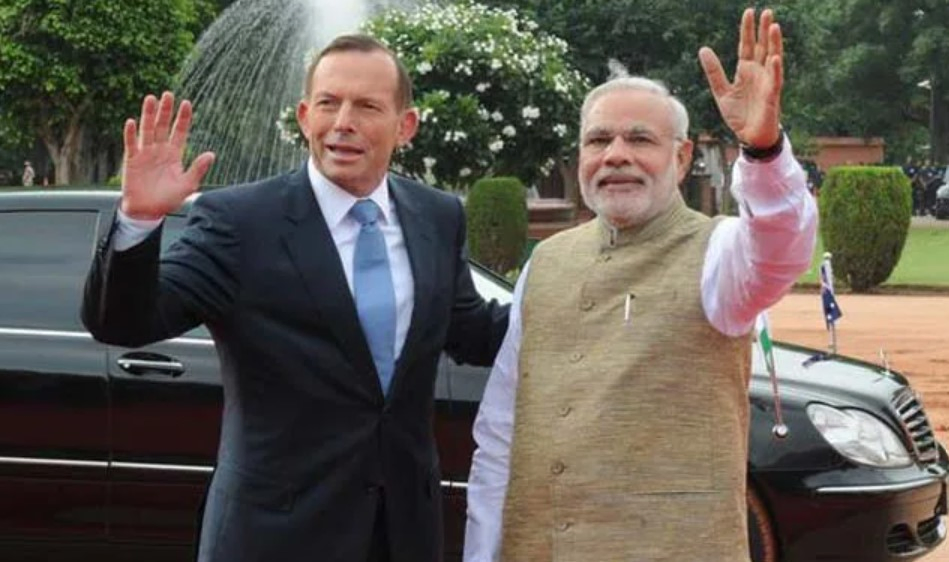
The opening day of the event included Prime Minister Narendra Modi, President Stubb, External Affairs Minister S Jaishankar, members of the diplomatic corps, and strategic affairs experts and thinkers from various countries.
Stubb expressed his concern about the conflicts in the Middle East, Sudan, and Ukraine.
"My concern is that these conflicts are gradually becoming global. My aim today is to find a way to restore an international order where institutions, norms, and rules are respected," he said.
Stubb added that "without a functioning world order, power vacuums will be filled by raw power, rogue behavior, and predatory hegemons."
"Therefore, we hear assessments that the rules-based world order is dead. That a destructive force is destroying all international institutions and rules that have been established since World War II. And that the old system is inevitably collapsing."
The Finnish leader argued that the world should strive to create "concrete normative proposals" for fixing the global order and making it work better for everyone. He emphasized that this approach is based on interests and realism.
"I believe that the Global South will determine what the next world order will look like. And India will be a major power, if not the dominant force, in determining whether the world will move towards a multi-polar system characterized by deals and transactions, or whether the world will move towards a new, cooperative, fair, and representative multilateral global order based on international institutions, rules, and norms," Stubb said.
He added that the policy choices of India and other key powers are crucial in this transition.
"The world is changing in a similar way to how it did after World War I, World War II, and the Cold War. It will take a few days to settle," he asserted.
Stubb stated that "the global power balance has shifted."
He added, "We live in a time of power politics, where might seems to make right, with violence once again becoming a tool of foreign policy used around the world with very little restraint."
In Ukraine, Russia is trying to "subjugate a sovereign country" through a war that is a "blatant violation" of international law, he said.
"The way this war ends will have major consequences not only in Europe but globally. It is in all of our interests that the outcome does not reward the aggressor," Stubb argued.
In the Middle East, the events have taken rapid turns.
"We are now witnessing a regional escalation with countries which were pushing for diplomatic solutions," he said.
Stubb said that he had the opportunity to speak to the President of the UAE and the Emir of Qatar, and also to gain insights from the Prime Minister of India on how he sees the situation.
"Currently, the rules-based trade system is not delivering as it should. And, trade is being wielded as a geopolitical tool, an instrument of power. In this area, India's leadership is needed," he said.
Stubb also said that "none of the previous world orders had been perfect" and the West should "drop the illusion of a perfect order."
"At times, we offered advice and criticism, from our ivory towers, to those faced with a different reality. Now our holiday from history is over. Instead of preaching and teaching, it's time for us to learn from others, and India would be a good starting point," Stubb said.
He added, "The foundations for the United Nations were built in San Francisco, much like the framework for our global financial system that was built in Bretton Woods. I think what the world needs now is a new San Francisco moment."
"And if I may, my procedural proposal is that we should have a New Delhi moment. In other words, India should gather world leaders in Delhi and begin the process of looking at what happens after wars," Stubb said.
"So, in conclusion, it is in our interest to make the international system more inclusive and fairer while maintaining its core values and principles," the Finnish president said.